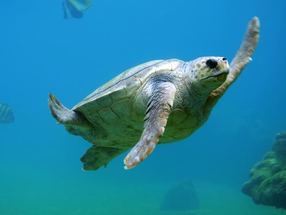
Marine life in Tanzania reflects the biodiversity of the western Indian Ocean, supported by warm tropical waters and nutrient flow along the East African coastline. The country’s reefs host a broad range of Indo-Pacific species, with variation depending on location and seasonal conditions.
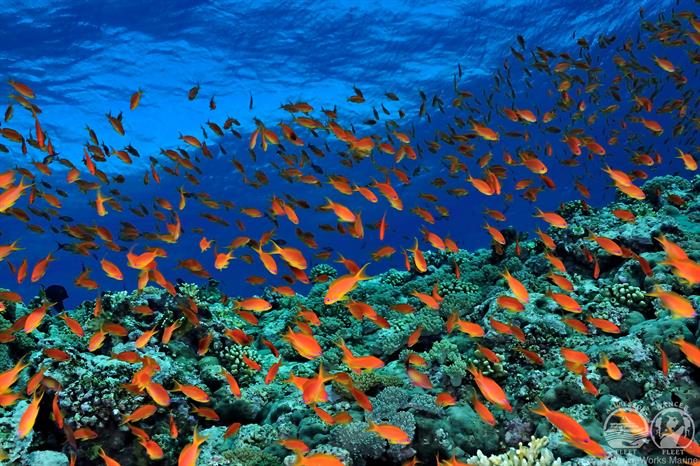
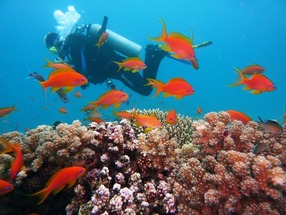
Coral reef systems around Zanzibar, Pemba, and Mafia Island include hard corals, soft corals, sea fans, and sponge formations that provide habitat for a wide variety of reef fish. Divers commonly encounter angelfish, butterflyfish, surgeonfish, parrotfish, groupers, and schools of snapper moving across reef slopes and coral gardens. Moray eels, octopus, and reef lobsters are frequently found within rocky crevices and coral heads.
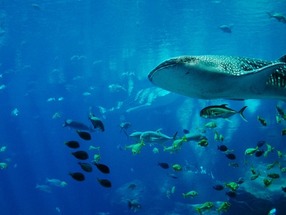
Mafia Island is particularly known for seasonal whale shark activity, typically occurring between October and March. These encounters are primarily surface-based snorkeling experiences, but the presence of whale sharks highlights the productivity of the surrounding waters. Humpback whales migrate along the Tanzanian coast between July and September, and although encounters during dives are uncommon, their presence may occasionally be observed offshore.
Pemba Island is often considered the most pelagic-oriented of Tanzania’s dive regions. Stronger currents and deeper walls increase the likelihood of sightings such as barracuda, tuna, giant trevally, and occasionally reef sharks. While shark encounters are not guaranteed, they are more frequent here than in Zanzibar’s shallower reef systems.
Macro life is present throughout Tanzanian dive sites, including nudibranchs, shrimp, and other small reef organisms, though the country is not primarily positioned as a macro destination. Overall, Tanzania offers balanced reef biodiversity with seasonal megafauna highlights and relatively healthy coral ecosystems compared to more heavily dived regions.