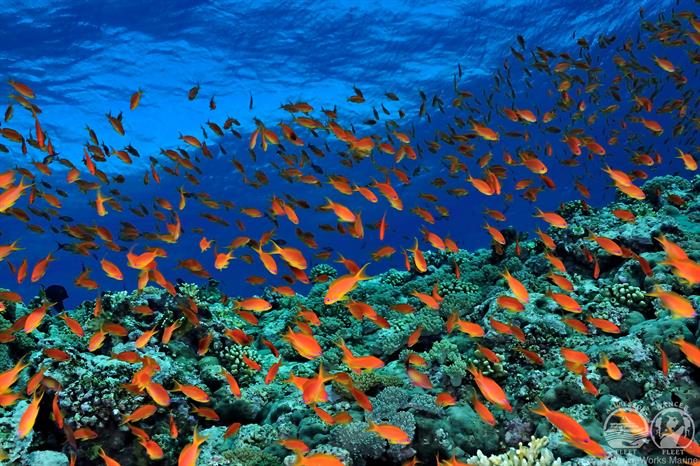
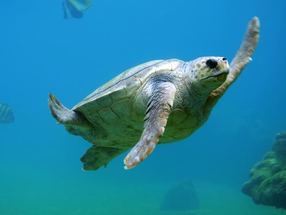
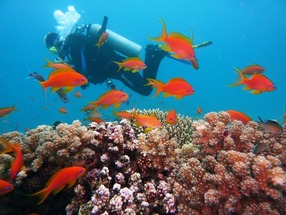
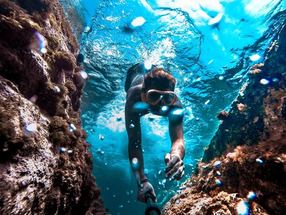
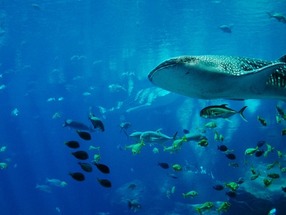
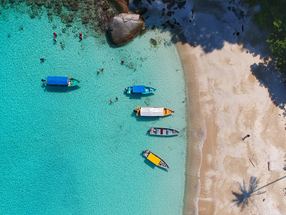
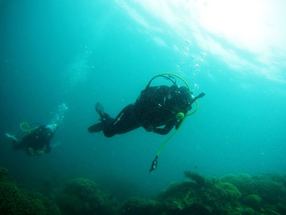
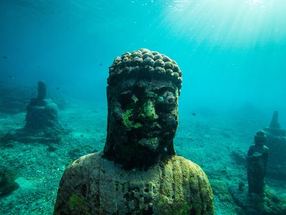
Scuba diving in São Tomé and Príncipe is largely exploratory, with dive sites spread around both main islands and nearby islets. There are no formal marine parks with fixed routes, and conditions can vary, but the volcanic underwater terrain and low diver traffic make these sites appealing to experienced divers seeking something off the beaten path.
Best Dive Spots for Experienced Divers
Ilhéu das Rolas, located near the equator south of São Tomé Island, offers some of the most dramatic diving in the country. The underwater landscape features steep volcanic slopes, lava rock formations, and drop-offs into deep Atlantic water. Currents can be strong, attracting larger fish species, rays, and occasional pelagic visitors.
Pedras Tinhosas, a remote group of rocky islets south of Príncipe, is considered one of the most adventurous dive areas in São Tomé and Príncipe. These offshore sites are rarely dived and require careful planning and favorable conditions. Divers may encounter large schools of fish, sharks, and rays, with relatively undisturbed marine life due to minimal fishing pressure.
South Coast of São Tomé offers rugged dive sites with volcanic rock, caves, and arches. These dives often involve deeper profiles and variable visibility, making them better suited for confident divers comfortable with Atlantic conditions.
Best Dive Spots for Beginners
Príncipe Island provides some of the calmer and more accessible dive sites in the country. Sheltered bays and coastal reefs offer gentler conditions, shallower depths, and easier navigation, making them more suitable for beginner and newly certified divers.
Nearshore sites around São Tomé Island, particularly in protected coastal areas during calm weather, can also be appropriate for beginners. These dives typically feature shallow rocky reefs, moderate visibility, and a variety of reef fish, allowing new divers to gain experience in a controlled setting.
Overall, the best diving in São Tomé and Príncipe is defined by exploration, volcanic scenery, and low diver density rather than polished dive tourism. Site selection depends heavily on weather conditions and local knowledge, and diving is best approached with flexibility and realistic expectations.