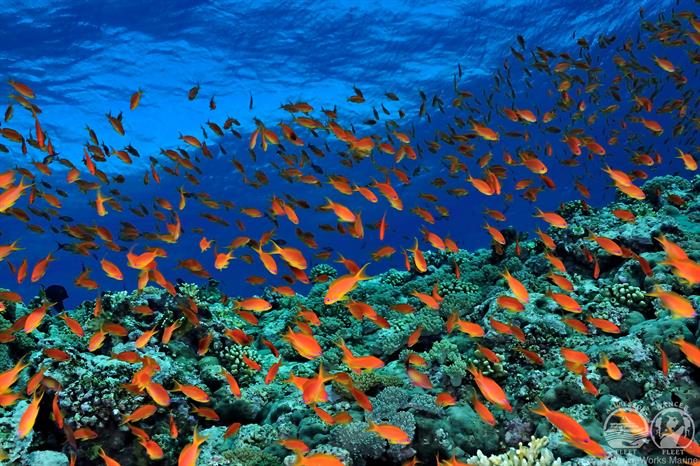
Madagascar’s marine life reflects the island’s long geographic isolation and its position within the western Indian Ocean. Many reef systems remain relatively untouched, which results in healthy coral cover, high fish density, and a strong mix of tropical reef species and larger pelagic animals. Biodiversity is one of the main reasons divers choose Madagascar over more developed destinations.
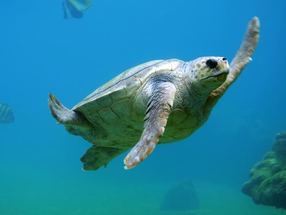
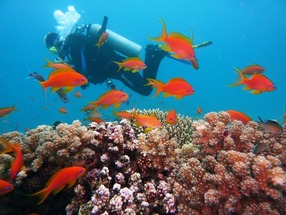
Coral reefs around Madagascar are home to a wide variety of hard and soft corals, including extensive table corals, sea fans, and sponges. These reefs support large schools of reef fish such as angelfish, butterflyfish, parrotfish, triggerfish, and snappers. Moray eels, turtles, and octopus are commonly encountered, particularly in areas with limited fishing pressure.
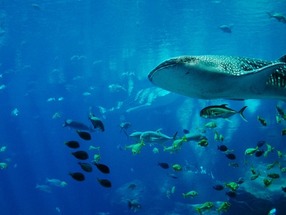
Seasonal megafauna is a major highlight. Along the northwest coast, especially around Nosy Be, whale sharks are regularly sighted during the warmer months, often feeding near the surface. On the east coast, Madagascar becomes one of the Indian Ocean’s most important breeding and calving grounds for humpback whales, which migrate here annually and can be heard and occasionally seen during dives.
Pelagic encounters are possible throughout the country, depending on location and season. Barracudas, tuna, and large trevallies are relatively common, and reef sharks may be spotted in less disturbed areas. While Madagascar is not known for guaranteed shark-heavy diving, sightings are possible, particularly around offshore reefs and pinnacles.
For macro enthusiasts, Madagascar also delivers. Nudibranchs, crustaceans, frogfish, and well-camouflaged reef species can be found on slower reef dives, especially in areas with volcanic rock formations and mixed coral habitats. The overall marine ecosystem feels balanced and alive, making dives rewarding even without headline species.